

Abstracts for my most recent papers:
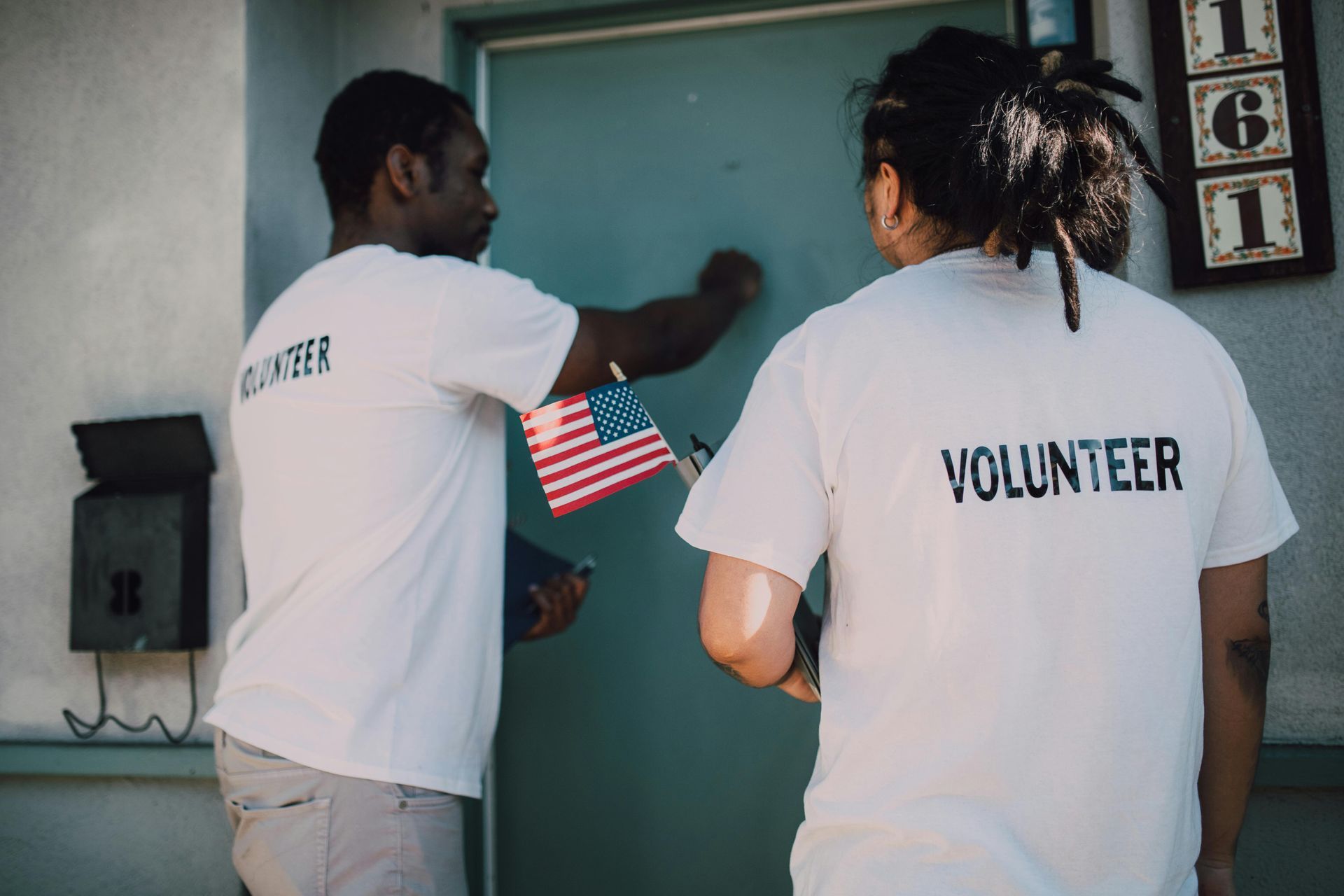
The Vicious Cycle: The Exclusion of Low Socioeconomic Status Voters from Mobilization Efforts
In theory, democratic political systems are created to insure equality amongst their citizenry through universal suffrage. In reality, there is very little equality between those who vote and those who do not. From the study of mass behavior, we know that the affluent and educated vote. From the literature, we also know that campaigns intentionally mobilize these particular voters because they vote. Poor and uneducated voters are disregarded by campaigns and for this reason they do not participate. In this paper I ask, will low socioeconomic status voters participate, if they are mobilized? I explore the effects of a non-partisan “Get-Out-the-Vote” personal canvassing campaign on individual, poor and uneducated, low propensity voters. Using a randomized field experiment, I find that individual, low propensity and low socioeconomic status voters who are personally contacted and encouraged to vote participate at significantly higher rates than those who are not.
Neighborhoods that Matter: How Place and People Affect Political Participation
Well established in the literature is that social context, like the racial or partisan composition of neighborhoods, affects individual political behavior. Less understood is how the design of neighborhoods may also influence these behaviors. This article seeks to improve how physical context is measured and to examine how the built environment subsequently affects individual political participation. Using a nationally representative survey with measures of the frequency of neighbor interaction and individual voter turnout and to which I merged respondents’ census tract information and then used Google Maps images to code respondents’ neighborhood design features, I show how the physical structure of residential places—whether homes have porches, streets are tree-lined, neighborhoods have natural gathering places—promotes neighborly exchanges that subsequently affect individual voter turnout.
Undermining the Party: Anti-Black Attitudes, Presidential Vote Choice, and Split-Ticket Voting Among White Voters
By Carrie A. LeVan and Stacey A. GreeneAmerican politics has entered, what Michael Tesler calls, a “most racial period,” causing racial attitudes to be increasingly salient. This shift provides an opportunity to examine the consequences to white Americans’ political behavior when their racial attitudes are easily activated. In this paper, we examine the influence of racial attitudes on (1) white Americans’ presidential vote choice and (2) how racial attitudes, in this period, may undercut the influence of partisanship on vote choice. We use data from the American National Election Studies Time Series Survey conducted from 2004 to 2020 to explore these questions. First, we find that anti-Black attitudes increasingly predict white vote choice. Next, we find that during this period, racially resentful, white Democrats became less likely to vote for the Democrat. This was not the same for white Republicans who, regardless of their racial attitudes, did not shift to the Democratic party. Finally, we find that white Republicans appear to hunker down and become significantly less likely to split their vote as they express more anti-Black attitudes. White Democrats become significantly more likely to jump ship as they endorse more anti-Black attitudes, revealing that racial attitudes were influential enough to overcome party loyalties during this period.

Learning by Doing: The Power of Active Learning and Authentic Assessments in the Political Science Classroom
By Nicholas Kapoor and Carrie LeVan
As students, many of us experienced years of passive learning, where teachers act
as the primary agents of education as experts who thoughtfully pass down
knowledge to their students. Through this sage-on-the-stage model, teachers
lectured to the students for 75-90 minutes and then made students regurgitate
back information on assessments. While lecturing contains some merit, it can
render students passive learners who are less likely to learn or retain the content.
Passive learning means that the brain retains very little. To learn and remember,
students must work with the information—test it, recap it, and explain it; teachers
cannot learn for them (Oakley 2011; Lang 2021). Learners must use the
information in class in meaningful ways, making deep neural connections between
the learner and the information (Ambrose, et al. 2010).
as the primary agents of education as experts who thoughtfully pass down
knowledge to their students. Through this sage-on-the-stage model, teachers
lectured to the students for 75-90 minutes and then made students regurgitate
back information on assessments. While lecturing contains some merit, it can
render students passive learners who are less likely to learn or retain the content.
Passive learning means that the brain retains very little. To learn and remember,
students must work with the information—test it, recap it, and explain it; teachers
cannot learn for them (Oakley 2011; Lang 2021). Learners must use the
information in class in meaningful ways, making deep neural connections between
the learner and the information (Ambrose, et al. 2010).
Active learning, in contrast, includes any activity in which every student must think,
create, or solve a problem. As an unattributed quotation tells us, “Tell me
something, and I will forget. Show me, and I will remember. Involve me, and I will
learn.” Teachers engage students in the learning process and connect them to the
course material. Rather than listening to the instructor deliver content, students
engage in activities that require them to think critically, argue, reflect, and analyze
as they process course content. As Gonzales (2018) tells us: “To learn, students
need to do something.” Active learning gets beyond activities and gives students
the space to understand the rationale for the task. Meta-narration--explaining to
students the reasoning for the task--offers more engagement with the lessons’
material than just handing students an activity with no context.
create, or solve a problem. As an unattributed quotation tells us, “Tell me
something, and I will forget. Show me, and I will remember. Involve me, and I will
learn.” Teachers engage students in the learning process and connect them to the
course material. Rather than listening to the instructor deliver content, students
engage in activities that require them to think critically, argue, reflect, and analyze
as they process course content. As Gonzales (2018) tells us: “To learn, students
need to do something.” Active learning gets beyond activities and gives students
the space to understand the rationale for the task. Meta-narration--explaining to
students the reasoning for the task--offers more engagement with the lessons’
material than just handing students an activity with no context.
